 by
by The Portugal Job Seeker Visa 2026 is one of the most innovative immigration tools available to Nigerian professionals — a legal pathway that allows you to travel to Portugal specifically to look for work, with up to 120 days to secure employment before transitioning to a full work and residence permit. Combined with Portugal’s growing tech scene, golden weather, affordable cost of living relative to other Western European nations, and a welcoming attitude toward African migrants, Portugal has become a top destination for ambitious Nigerian professionals ready to build an international career in the EU. This guide covers everything you need to know about the job seeker visa process, requirements, in-demand sectors, and life in Portugal.
Why Portugal Is Attracting Nigerian Professionals
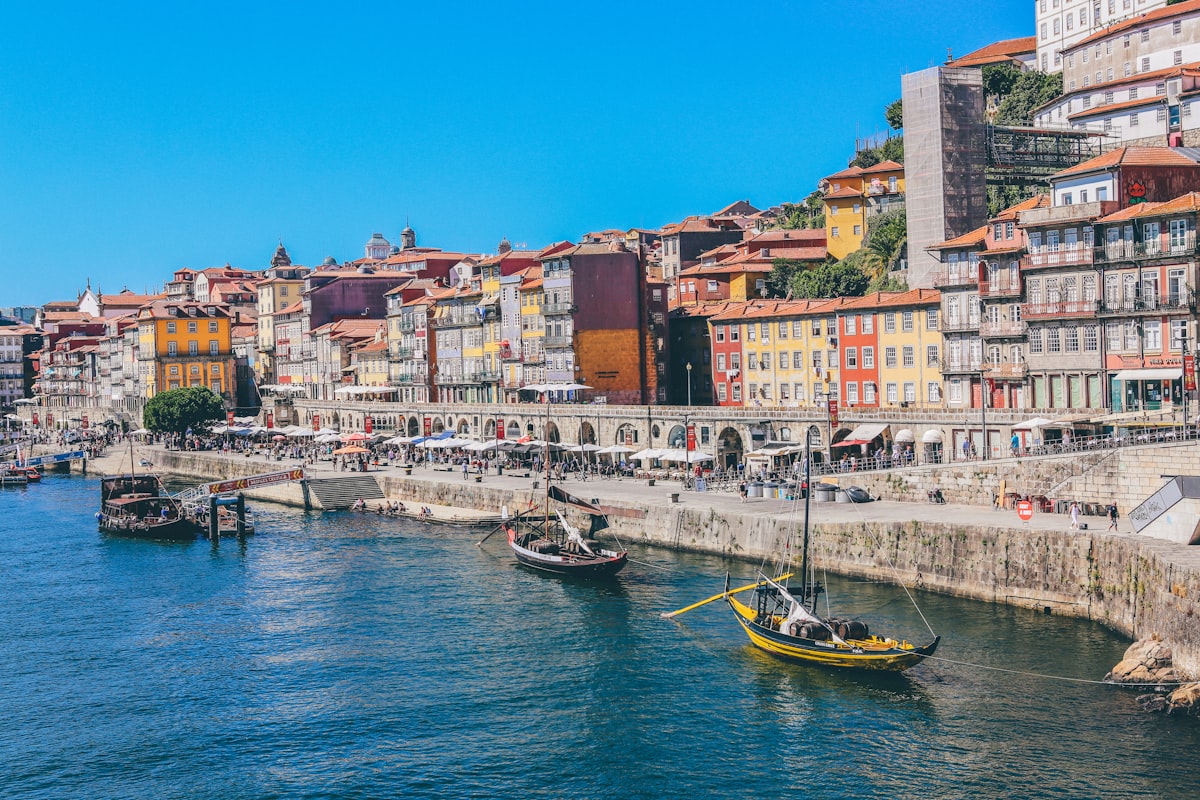
Portugal has undergone a dramatic economic transformation since 2015, emerging as one of Europe’s most dynamic tech hubs. Lisbon and Porto host the headquarters or major European offices of companies like Volkswagen Digital Solutions, Farfetch, OutSystems, Feedzai, and a rapidly growing ecosystem of tech startups. The government has actively courted international talent through programmes like the Job Seeker Visa, the Tech Visa, and the D7 Passive Income Visa. For Nigerian professionals, Portugal’s historical ties with Africa, the official use of Portuguese (which is also spoken in Nigeria’s neighbour — Angola — and the growing Nigeria-Portugal business corridor), and the relatively lower cost of living compared to the UK or Germany are all appealing factors. Lisbon rental prices, while rising, remain significantly below London, Amsterdam, or Dublin.
What Is the Portugal Job Seeker Visa?
The Portugal Job Seeker Visa (Visto de Procura de Trabalho) was introduced to allow skilled non-EU nationals to enter Portugal to actively search for employment. It is valid for 120 days and is non-renewable — you must either secure employment and convert it to a work and residence permit within this window, or depart. The visa is appropriate for professionals who are highly qualified or are family members of Portuguese nationals or EU citizens, or who have recognised qualifications in Portugal’s priority sectors. It is issued by AIMA (Agency for Integration, Migration and Asylum), the successor body to SEF.
| Visa/Permit Type | Who It’s For | Duration | Route to Residency |
|---|---|---|---|
| Job Seeker Visa | Skilled workers coming to search for jobs in Portugal | 120 days | Transitions to work permit on employment |
| Tech Visa | Tech professionals with a job offer or own tech startup | 2 years (renewable) | Yes — 5 years to PR |
| D3 Highly Qualified Activity Visa | Professionals with a job offer in highly qualified roles | 2 years | Yes — 5 years to PR |
| D7 Passive Income Visa | Remote workers, investors with regular passive income | 2 years | Yes — 5 years to PR |
Eligibility Requirements for Nigerians
To be eligible for the Portugal Job Seeker Visa, Nigerian applicants must meet one of the following conditions: (1) hold a qualification level 4 or above (equivalent to secondary school level or higher under the EQF framework); (2) be a family member of a Portuguese citizen; or (3) be a citizen of a country with a special cooperation agreement with Portugal. Nigerian nationals qualify primarily through the first condition — a university degree or higher qualification. You must also demonstrate sufficient financial means to support yourself during your stay in Portugal (currently a minimum of €760 per month, equivalent to Portugal’s minimum wage), have accommodation arranged, and have no criminal record.
Step-by-Step Application Process
- Prepare your documentation. Required documents include: valid Nigerian passport (minimum 6 months validity), proof of educational qualification (certified and apostilled), updated CV, proof of accommodation in Portugal (hotel reservation or rental agreement for the initial period), proof of financial means (bank statements showing at least €760/month), travel insurance with minimum €30,000 coverage, and a clean Nigerian Police Force criminal record certificate (apostilled and translated into Portuguese by a certified translator).
- Apply at the Portuguese Consulate General in Lagos or the Embassy in Abuja. Nigeria has both a Consulate General in Lagos and an Embassy in Abuja. VFS Global handles Portugal visa applications in Nigeria. Submit your application with all supporting documents and pay the visa fee (€90 in 2026).
- Attend biometrics appointment. You will be called for a biometrics appointment at VFS Global in Lagos or Abuja to provide fingerprints and a photograph.
- Await visa decision. Processing typically takes 30–60 days. You may be asked for additional documents or an interview at the consulate.
- Travel to Portugal and actively job hunt. On arrival, you have 120 days to secure a job offer and sign an employment contract. Your employer will then support your application for a Temporary Residence Permit (Autorização de Residência Temporária) through AIMA, which will allow you to remain and work legally for up to 2 years, renewable.
In-Demand Sectors for Nigerians in Portugal 2026
| Sector | Key Roles | Average Monthly Salary (EUR) |
|---|---|---|
| Technology & IT | Software Developer, Data Engineer, DevOps, UX Designer | €2,500 – €5,500 |
| Tourism & Hospitality | Hotel Manager, Event Coordinator, Tour Guide | €1,200 – €2,500 |
| Finance & Fintech | Financial Analyst, Compliance Officer, Accountant | €2,000 – €4,500 |
| Healthcare | Nurse, General Practitioner, Physical Therapist | €1,800 – €4,000 |
| Agriculture | Agricultural Engineer, Farm Supervisor | €1,200 – €2,000 |
Cost of Living in Portugal for Nigerian Workers
Portugal remains one of Western Europe’s most affordable countries for expats. In Lisbon, a one-bedroom apartment outside the city centre costs €900–€1,500 per month, while Porto is slightly cheaper at €750–€1,200. Groceries for one person run approximately €200–€350 per month. Public transport monthly passes in Lisbon cost €40 (city-wide pass), and healthcare is provided through the Serviço Nacional de Saúde (SNS) — free or very low-cost for residents with an NHC number. A realistic monthly budget for a single Nigerian worker living comfortably in Lisbon is €1,800–€2,500, which is significantly lower than Dublin, Amsterdam, or London. Cities like Braga, Aveiro, and Coimbra offer even lower costs with growing job markets in tech and academia.
Pathway to Portuguese Permanent Residency and Citizenship
Portugal offers one of Europe’s most accessible citizenship pathways for African migrants. After 5 years of continuous legal residence in Portugal, you are eligible to apply for Portuguese citizenship by naturalisation. Requirements include: passing a basic Portuguese language test (A2 level — equivalent to conversational greetings and simple transactions), having no criminal record, and demonstrating ties to the Portuguese community. Importantly, Portugal allows dual citizenship — meaning Nigerian professionals do not need to renounce their Nigerian passport to become Portuguese. This is a significant advantage over countries like the Netherlands or Japan. A Portuguese passport grants visa-free access to over 190 countries and full EU freedom of movement.
Frequently Asked Questions: Portugal Job Seeker Visa for Nigerians
How long does it take to process the Portugal Job Seeker Visa from Nigeria?
Processing typically takes 30–60 days from the date of a complete application submission. Delays are common when documents require additional authentication or when the consulate requests a personal interview. Nigerian applicants are advised to submit applications at least 10–12 weeks before their planned travel date to allow buffer time. VFS Global Nigeria (Lagos and Abuja centres) handles submissions on behalf of the Consulate General.
Can I work while on the Portugal Job Seeker Visa?
No — the Job Seeker Visa is specifically for job searching, not employment. You may not begin formal paid work until you have converted the visa into a Temporary Residence Permit after signing an employment contract. However, you can attend interviews, network professionally, attend job fairs, and sign an employment contract while on the job seeker visa. Once you sign a contract, your employer submits the residence permit application to AIMA, and you may typically begin work after confirmation of application receipt.
Do I need to speak Portuguese for a Portugal Job Seeker Visa?
Not for the visa application itself — the Job Seeker Visa does not require Portuguese language proficiency. However, learning basic Portuguese significantly increases your employability in Portugal, since many local employers (outside the tech sector) conduct interviews and onboarding in Portuguese. The A2 level is required for citizenship later. Many Nigerian applicants begin Duolingo or Babbel Portuguese lessons 3–6 months before their planned arrival, and Lisbon’s language schools offer affordable intensive courses for new arrivals.
Is Portugal’s Tech Visa better than the Job Seeker Visa for IT professionals?
If you already have a job offer from a Portuguese company or are starting a tech business in Portugal, the Tech Visa (Visto D3 Tech) is generally superior — it offers immediate work authorisation for 2 years without the 120-day job search pressure. The Job Seeker Visa is ideal for Nigerian IT professionals who want to arrive, network in person, and close a role directly before committing to a full relocation. Both visas lead to the same Temporary Residence Permit. Many Nigerian tech professionals use the Job Seeker Visa as a test run — staying for 90–120 days, attending tech events like Web Summit in Lisbon, and converting promising conversations into offers before transitioning to a full permit.
Can my family join me in Portugal?
Not on the Job Seeker Visa itself — this visa is for individual job seekers. However, once you convert to a Temporary Residence Permit (after securing employment), your spouse and dependent children can apply for family reunification permits. Portugal’s family reunification process is generally straightforward and is processed by AIMA within 3–6 months of the primary permit holder’s residence permit being issued. Children can attend Portuguese public schools, and spouses can apply for their own work authorisation.
Take Your First Step Toward Portugal in 2026
Portugal in 2026 is actively welcoming skilled Nigerians through the Job Seeker Visa, the Tech Visa, and the D3 residence permit. The combination of EU access, dual citizenship eligibility, affordable living, growing tech economy, and a warm climate makes Portugal one of the most compelling European destinations for Nigerian professionals ready to make their international move. Start by getting your Nigerian credentials apostilled, saving 3–4 months of living expenses, and researching tech companies and recruiters in Lisbon and Porto. Explore more of our international work visa guides to compare your options across the globe and find the path that’s right for you.
Life in Portugal as a Nigerian Expat: Community, Culture, and Integration
Portugal has one of the largest and most established African immigrant communities in Western Europe, rooted in its historical connections with Portuguese-speaking Africa — particularly Cape Verde, Angola, Guinea-Bissau, and São Tomé and Príncipe. While Nigerians are not the largest African group in Portugal, the Nigerian community has grown significantly in Lisbon, Porto, and Setúbal over the past decade. Nigerian churches (predominantly Pentecostal and Catholic), cultural associations, and informal support networks provide a meaningful social foundation for new arrivals. Lagos de Laranjeiras and the Amadora district of Lisbon have notable African communities where Nigerian groceries, restaurants, and barbershops can be found.
Portuguese society is generally warm and receptive toward Africans — a significant contrast with some Northern European countries where Nigerian workers report higher levels of workplace discrimination. Discrimination does exist in Portugal but is less overt in the professional environment. The country has a strong public commitment to anti-discrimination law under the CICDR (Commission for Equality and Against Racial Discrimination), and legal recourse is available when needed. Most Nigerian professionals in Portugal describe their integration experience positively, noting that Portuguese colleagues are curious about Nigeria, appreciate the shared Lusophone-African cultural familiarity, and value direct communication — a trait Nigerians and Portuguese share.
The Portuguese weather is an often-cited bonus — Lisbon averages over 300 sunny days per year, Porto has a mild Atlantic climate, and the Algarve coast offers world-class beaches within easy reach by train or bus. For Nigerian professionals accustomed to warm climates, Portugal’s mild winters (rarely below 8°C in Lisbon) are far more comfortable than the cold months in the Netherlands, Ireland, or Canada. Building a sustainable professional and personal life in Portugal is well within reach for Nigerians who arrive prepared, financially stable, and language-motivated.
Portugal’s unique combination of EU citizenship eligibility with dual nationality rights, affordable living standards, and its warm African-community atmosphere makes it an especially compelling choice among all European destinations for Nigerian professionals planning their international career move in 2026 and beyond.